
FMCSA Principal Place of Business Requirements: What Wyoming Motor Carriers Need to Know in 2026
If you operate a motor carrier in the USA, your Federal Motor Carrier Safety Administration (FMCSA) principal place of business address (PPOB) is now being verified by a new federal registration system called Motus. If that address is a P.O. box, virtual address, a mail forwarder, or a registered agent address, you may have a compliance problem you don’t know about yet. This article explains what the rule requires, what changed, and what your options are. Wyoming LLC motor carriers face a particular exposure here that we cover in detail below. This is educational information only. Every situation is different, and we encourage you to speak with a transportation attorney about your specific circumstances.
What Happened in Indiana and Why It Changed Everything
On February 3, 2026, four Amish men from the Bryant community in Jay County, Indiana were killed when a truck driver failed to stop for slowed traffic on State Road 67. The driver worked for a carrier called AJ Partners. Within hours, independent investigators in the FreightX community traced that carrier back to a network of shell companies with rotating DOT numbers, shared trucks, and ghost office addresses that had collectively accumulated nearly 100 crashes before that Tuesday afternoon.
The FMCSA calls these operations chameleon carriers. They register multiple authorities like burner phones. They operate under one DOT number until scrutiny heats up, then dissolve and reappear under a new name, a new number, and a new fake address. The crashes and liability disappear on paper. The trucks keep rolling.
The Indiana crash did not create this problem. Industry professionals had documented it for years. But the deaths the men in Indiana gave federal regulators the political will to act. Within months, FMCSA launched its most significant registration overhaul in decades.
Why does this matter to legitimate small carriers? The crackdown on chameleon carriers is tightening the same registration system every motor carrier in the country uses. Some legitimate small carriers with genuine compliance gaps are going to get caught in the same net as the bad actors.
What Is FMCSA Motus and What Does It Verify?
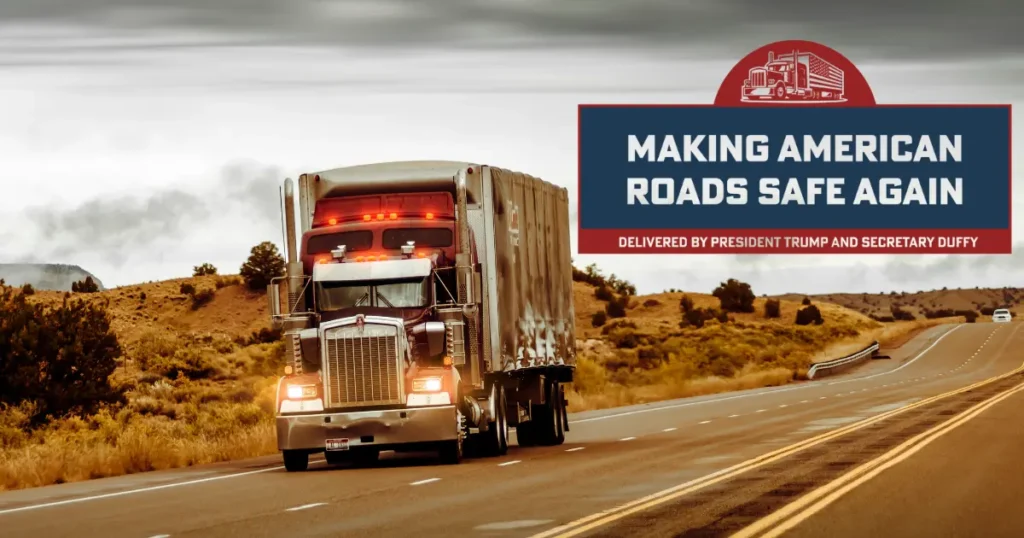
What is the FMCSA Motus system? Motus is FMCSA’s new centralized registration platform that went live on May 19, 2026. U.S. Transportation Secretary Sean P. Duffy and FMCSA Administrator Derek D. Barrs launched it under the banner of Making American Roads Safe Again. It replaces a decades-old network of five or six disconnected legacy applications that FMCSA itself described as rife with fraud, waste, and abuse. Every USDOT-registered motor carrier, freight broker, and freight forwarder now operates under it.
Why was a new system needed? Under the old system, registering as a motor carrier required only an email address, a name, and a physical address.
That low barrier made it easy for bad actors to register under fake identities, accumulate a negative safety record, then dissolve and reappear under a new name and a new number. FMCSA estimates there are several thousand suspicious registration numbers currently tied to fraudulent carriers. The data was scattered across disconnected systems with no way to connect the dots between a carrier’s past and its new identity.
What does Motus verify that the old system did not?
Two layers of verification that did not exist before:
•First, every user must verify their identity using a government-issued ID and a digital facial scan.
•Second, a separate private verification company independently confirms your company’s legal name, ownership structure, and principal place of business address before granting access.
Secretary Duffy described it as a system designed to “stop fraud dead in its tracks.” That address verification is automatic and applies to every registrant.
Does Motus apply to existing carriers or just new ones? Both.
Every existing registrant completes identity and address verification the first time they access Motus. There is no grandfathering of addresses that do not meet the PPOB standard.
What happens if your address fails PPOB verification in Motus? At minimum you face delays. In more serious cases carriers can face compliance reviews, registration holds, or out-of-service orders. FMCSA Administrator Barrs put it plainly: the new system is designed to improve efficiency for legitimate carriers while strengthening the agency’s ability to detect fraud and identify unsafe operators.
Legitimate carriers with a real address have nothing to fear. Carriers with a ghost address do.
What Is a Principal Place of Business Under FMCSA Rules?
What is the FMCSA definition of Principal Place of Business? Under 49 CFR 390.5, a motor carrier’s principal place of business is the single location where business records are kept and where safety management decisions are carried out. It must be a real physical address where someone is present and accountable.
What does FMCSA look for when verifying a PPOB address? Evidence that the address is a genuine place of business. They look for a physical commercial address, evidence that management and safety oversight happen there, accessible records, and a real person who can receive investigators and produce documents. When investigators show up, someone needs to be there.
Has the PPOB rule changed in 2026? The regulation has been on the books for years. What changed is enforcement. Motus gives FMCSA the technical infrastructure to verify addresses at scale for the first time. The rule is the same. The ability to enforce it is new.
In plain language: “You can’t have 200 DOT numbers going to a P.O. Box.” That is a direct quote from an FMCSA official in Overdrive Magazine, March 2026.
Why Wyoming LLC Motor Carriers Face a Specific Risk
Why are Wyoming LLC motor carriers particularly affected?
Wyoming is one of the most popular states for LLC formation. No state income tax, strong asset protection, low filing fees, and member privacy. Thousands of small carriers form Wyoming LLCs every year. Many use a registered agent address as their listed address. That is fine for a standard LLC. It is not fine for a motor carrier FMCSA principal place of business Wyoming registration.
What is the difference between a registered agent address and a PPOB? A registered agent address receives legal correspondence for your LLC. That is all it does. A PPOB requires a real person physically present, safety management happening there, and accessible records. Registered agent addresses are shared by dozens or hundreds of companies, have no dedicated space for your operation, and have no staff who can verify your presence to a federal investigator. They will not pass PPOB verification.
Can a Wyoming LLC motor carrier operate from another state? Yes. Operating from another state is common and legitimate. The issue is not where you live or run your trucks. The issue is whether your FMCSA registered address meets the PPOB standard. If you listed a registered agent address as your PPOB, the address is the problem, not your LLC.
What Address Types Qualify as an FMCSA Principal Place of Business?
Three types generally qualify:
•First, a private residence, if that is truly where you run your carrier business.
•Second, a leased commercial office suite with dedicated space and accessible records.
•Third, a private micro-office suite within a commercial building, where you have your own dedicated lockable space, on-site staff authorized in writing to receive investigators and accept documents, and a proper lease or services agreement in place.
Does the office need to be large? No. FMCSA is not evaluating square footage. They are evaluating whether the address is real and whether someone is present and accountable there.
What Address Types Do Not Qualify?
Will a P.O. box work as an FMCSA principal place of business Wyoming address?
No. Explicitly disqualified. No physical presence, no staff, no space.
Will a mail forwarding service work?
No. A street address with no physical space and no staff does not meet the standard.
Will a registered agent address work?
No. Shared by many companies, exists only for legal correspondence, no staff who can verify your operations.
Will a virtual office work?
No. A mailing address and phone service with no physical space and no on-site staff does not qualify.
Will a shared coworking space or hot desk work?
No. You need dedicated lockable space that is genuinely yours. A hot desk where anyone can sit does not meet that standard.
Not all office arrangements are equal under FMCSA’s PPOB standard. What matters is whether the space is exclusively yours, properly documented, and whether on-site staff can verify your presence to investigators. Consult a transportation attorney before listing any address as your PPOB.
Can a Private Micro-Office Suite Qualify as an FMCSA Principal Place of Business?
Can a micro-office suite qualify as a PPOB?
It can, if it meets the right criteria. The suite must be a dedicated, private, lockable space that belongs to your business alone. On-site staff must be authorized in writing to receive investigators and accept documents on your behalf. The arrangement must be documented through a proper lease or services agreement. Tenants have access to their suite to conduct business, store records, and carry out day-to-day carrier activities.

What is the difference between a micro-office suite and a coworking space or virtual office?
A micro-office suite is a private, dedicated, lockable room that belongs exclusively to your business. A coworking space is shared common area. A virtual office is just a mailing address with no physical space. These are meaningfully different arrangements under FMCSA’s PPOB standard.
How Do You Fix a PPOB Problem?
If my current address does not qualify, how do I fix it?
You need a physical commercial address with a dedicated private space, a lease or services agreement, on-site staff authorized in writing to represent your operations, accessible records, and a USDOT registration update reflecting the new address.
Do I need to move my operation to Wyoming? No. You need a Wyoming address that meets the PPOB standard. A properly documented commercial suite in Wyoming with on-site staff and a real dedicated space can serve as your FMCSA principal place of business Wyoming registration while your trucks operate wherever your business runs.
Action Items for Wyoming Motor Carriers Right Now
- Check your current registered address. Is it a real commercial suite with dedicated space and on-site staff? If it is a registered agent address, a mail forwarder, or a virtual office, you may have a PPOB problem.
- Verify your Motus account status. If you have not accessed the new FMCSA Motus platform yet, do it now. Address verification happens at first access.
- Get your documentation in order. You need a lease or services agreement, an on-site contact, and written authorization for that contact to act on your behalf with government officials.
- Talk to a transportation attorney. If you have any doubt about whether your address qualifies, get legal advice before Motus raises the question for you.
- Do not wait for a compliance review. Getting ahead of a PPOB issue is significantly easier and less costly than resolving one mid-review.
The chameleon carrier crackdown is real. The Motus verification system has real teeth. Some legitimate small operators who never thought twice about their registered agent address are about to discover they have a compliance gap. It is fixable. It is much easier to fix before Motus finds it than after.
About MicroOffice Solutions
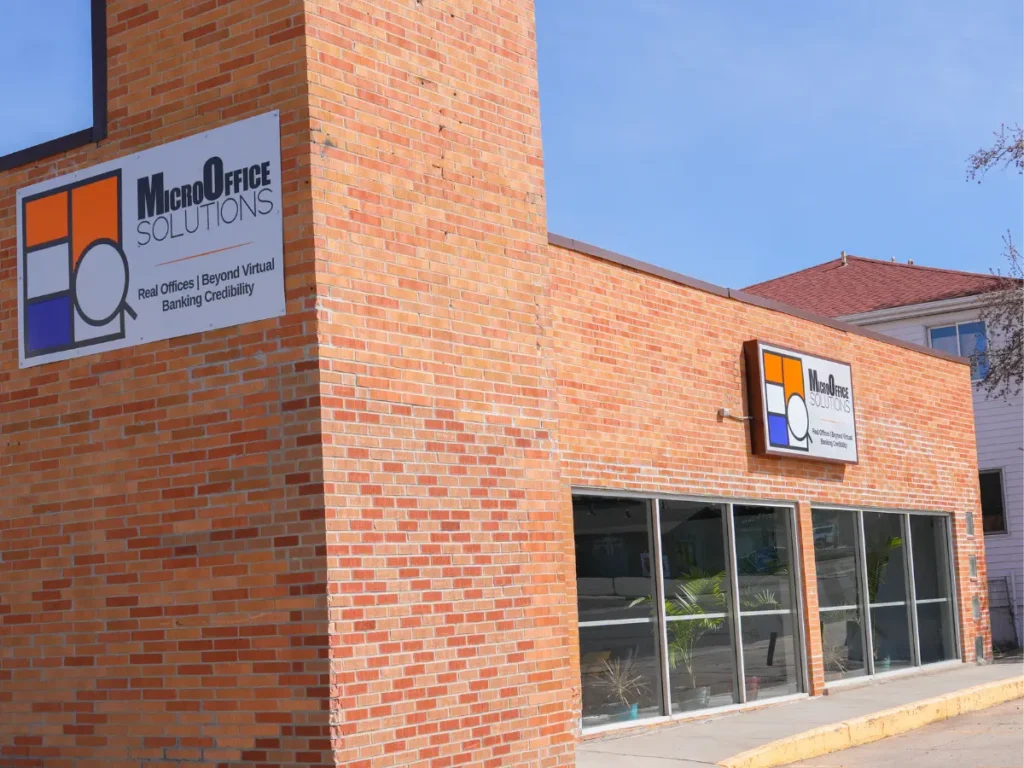
MicroOffice Solutions is a physical commercial office provider located at 2240 E. 12th Street, Casper, Wyoming 82609. We offer private dedicated suites, staffed on-site support, and proper lease documentation. We are not a registered agent service and not a mail forwarder.
This article is for educational purposes only and is not legal advice. Every carrier’s situation is different. Contact us at microofficesolutions.com to discuss your situation, and speak with a transportation attorney about your specific PPOB compliance needs.